Quick answer
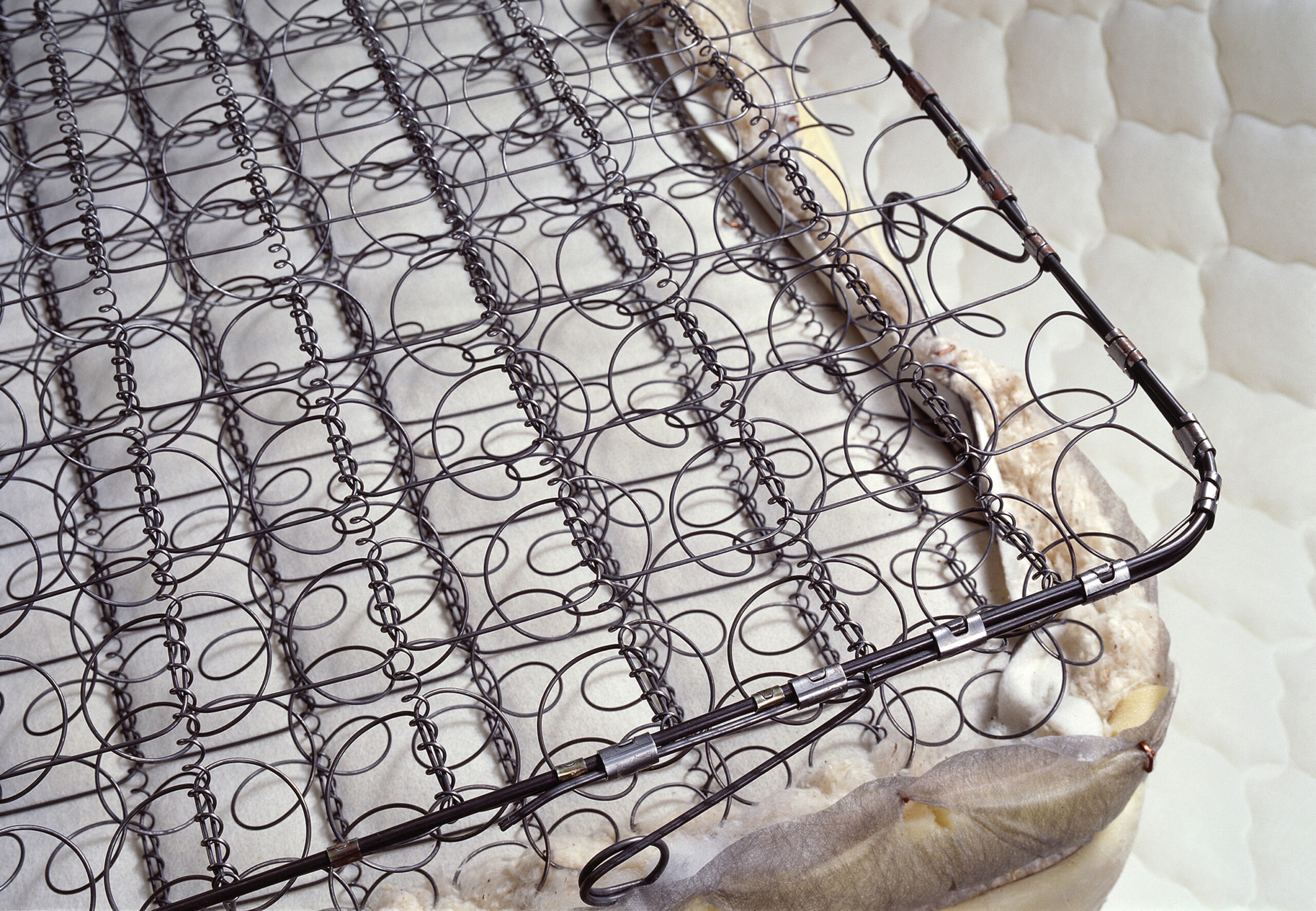
Keep an unknown spring unit whole. Connected or compressed springs can move when cut. Before cutting anything, ask whether a local service will take the mattress whole.
When to stop before the first cut
The spring unit is bent or compressed
Do not guess which wire holds the load.
The mattress layers are unknown
Keep the cover closed and ask about whole-item disposal.
You cannot secure the work
A helper holding it by hand is not a stable cutting setup.
A poking or broken spring is a reason to stop using the bed and arrange a proper repair or disposal. Clipping the visible end does not fix the whole structure.
Do not cut a spring close to your face or body. Gloves and goggles reduce some risks; they do not make uncontrolled spring movement safe.
If you already have loose metal
Treat a loose, unloaded wire piece differently from a complete spring unit. A trained person needs to identify the wire and use a cutter rated for that hardness and size. Check our cutter-rating guide before choosing a tool.
CCOHS recommends securing metal before cutting and warns about flying fragments. Follow the tool instructions. Do not twist the jaws or extend the handles for more force.
- Check the tool for damaged or loose parts.
- Keep hands and bystanders out of the cutting area.
- Use suitable eye and cut-resistant hand protection.
- Stop if the piece shifts, binds or needs excess force.
These checks do not explain how to release a loaded spring assembly. That needs the right equipment and knowledge of its construction.
Arrange the receiving site first
I have a [whole mattress / intact spring unit / loose metal pieces]. It is [condition]. Do you accept that? Does padding need to stay on? How should sharp parts be contained? What is the total fee?
| Material | Ask the receiving site |
|---|---|
| Whole mattress | Can it stay intact for pickup or recycling? |
| Spring unit with foam attached | Will it be accepted in that condition? |
| Clean loose steel | How should sharp ends be secured for transport? |
| Foam and fabric scraps | Is there a separate accepted route, or are they waste? |
Do not put sharp springs into thin bags. Use the receiving site’s approved container or securing method. Do not leave exposed coils where someone may step on or handle them.
Keeping it whole can save work
A service may already have the equipment to separate a mattress. Some programs do not take stripped partial units. Cutting first can close off an option you hoped to use.
Try bulk pickup, store haul-away or drop-off. Tell the provider if springs protrude, the cover is torn or the item has pests. A gently used mattress offer may not cover a badly damaged bed.
Common questions
Can I cut a spring mattress in half?
Do not use a general step-by-step method for an unknown spring unit. Springs, border wire and other connections can move when cut. Find a whole-item route first.
Can I cut off a spring poking through the mattress?
Do not treat that as a repair. Stop using the damaged bed and ask about proper repair, warranty or disposal.
Does every spring need cutting for recycling?
No universal rule applies. Ask the recycler whether it wants a whole mattress, an intact spring unit or clean metal.
Can I put cut coils in curbside recycling?
Only if that provider explicitly allows them and gives handling instructions. A general metal-recycling rule is not enough.
Is there an easier option than taking it apart?
Often the next step is a call to a bulk collector or receiving site. Compare that cost and effort before buying tools.
